|
Now to the old kit that has
been sitting in my closet for a great many years..and the much older factory
drawings which I would use for reference. The
major parts were cleaned up and checked for accuracy against the drawings. The fuselage is of course the British version with planned
modifications for the Canadian built aircraft.
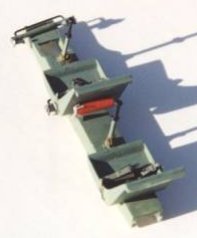
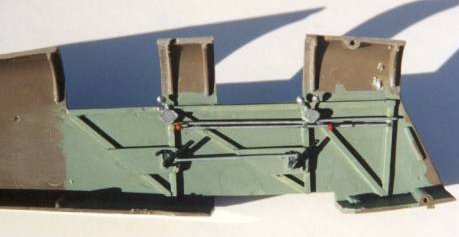
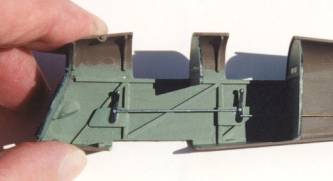
The molded in structure and throttles looked out of place and sure enough
the drawings confirmed my worst thoughts. Out
came the trusty Dremel and soon I had all of the interior removed and replaced
with Plasticard stock. The frame
structure was replaced as were the throttle, brake systems,
trim system, fuel shutoff and canopy emergency release.
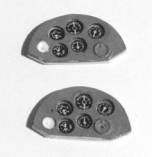
I did not like the kit
instrument panels and they were the next to get the treatment, using two layers
of plastic card with decal instrument faces.
These were sealed with a couple of drops of Polyscale clear gloss. The seats were attached to the control tunnel on the floor
but when I tried to fit things together I found that the seats were too wide and
the tunnel was equally out of proportion. The
seats were narrowed using Mr Dremel , new sides made from card stock and the new
tunnel built up from .020 card. Rudder
pedals were made up from brass bits and plastic rod and attached to the tunnel.
A fire extinguisher was made by turning a piece of plastic rod in my
battery powered drill and trimming with a nail board sanding stick.
Bits of brass were used to finish the bottle which was installed on the
back of the front seat. Eduard
photo etch seat belts were attached to the seats and the whole parcel was
installed in the fuselage. And it
fit fairly well. The only kit parts
in the fuselage are the firewall and the rear bulkhead which was properly
modified.
| The tail
assembly next got my attention, with the rudder and elevators being
separated from the fixed surfaces, and trim tabs installed. There were no trim
controls on the kit even though they are quite prominent on the real thing.
|
|
The wings got the treatment next , with the slats glued in place, filled
and contoured. The Canadian Moth
had a plywood leading edge covering over the ribs and this was taken care of
with Tamiya grey putty. The bottom
wing needed some extra attention with hand holds being drilled out and filed
smooth. The aileron external
control mechanism was finished using discs punched out of .010” card and glued
in place. The fuel tank received a
bit of enhancement using brass tube and plastic..more on this part later!
At this point, all rigging
points and control cable exits were drilled out using a no. 72 bit in a pin
vice. I plan on using stretched sprue for the rigging and control
cables and by pre-drilling, the job becomes much easier.
The lower wings are now in
place as is the tail assembly and tail wheel.
The plan is to paint the model before installing the upper wing ..and
apply the decals as well. What will
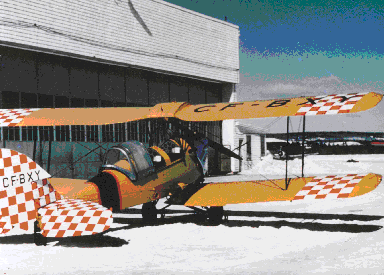
it look like ..Well remember this was a civilian Moth, with my own personalized
paint job..before the warbird restoration bug spread around the globe.
My Tiger Myth was an eye-catching airplane and within the next couple of
weeks, I’ll be able to finish this work of love.
|
I’m attaching a photo of the
real thing, taken at RCAF Station Greenwood, Nova Scotia in 1954..shortly after
being rolled out of the paint shop. I
know that a couple of the guys have already seen this photo but for those that
haven’t , enjoy. Not having a
digital camera, I can’t give you work-in-progress photos but they will follow
at a later date
|
|
Happy
Scratch building..
Barney
 |
|
1/32
Matchbox Tiger Moth Part 2
|
|
|